Tuesday, 29 December 2020

Bringing carbon emissions reporting into the new age via blockchain

Bringing carbon emissions reporting into the new age via blockchain

Bringing carbon emissions reporting into the new age via blockchain

Blockchain for supply chain management is one of the most practical business applications for large, multi-party sectors seeking trust and transparency across daily operations. As such, the mining and metals sector has now started to leverage blockchain technology to effectively track carbon emissions across complex, global supply chains. 

This month, The World Economic Forum launched a proof-of-concept to trace carbon emissions across the supply chains of seven mining and metals firms. Known as the Mining and Metals Blockchain Initiative, or MMBI, this is a collaboration between the WEF and industry companies including Anglo American, Antofagasta Minerals, Eurasian Resources Group, Glencore, Klöckner & Co., Minsur, and Tata Steel.

Jörgen Sandström, head of the WEF’s Mining and Metals Industry, told Cointelegraph that the distributed nature of blockchain technology makes it the perfect solution for companies within the sector looking to trace carbon emissions:

“Forward-thinking organizations in the mining and metals space are starting to understand the disruptive potential of blockchain to solve pain points, while also recognizing that the industry-wide collaboration around blockchain is necessary.”

According to Sandström, many blockchain projects intended to support responsible sourcing have been bilateral, resulting in a fractured system. However, this new initiative from the WEF is driven entirely by the mining and metals industry and aims to demonstrate blockchain’s full potential to track carbon emissions across the entire value chain.

While vast, the current proof-of-concept is focused on tracing carbon emissions in the copper value chain, Sandström shared. He also explained that a private blockchain network powered by Dutch blockchain development company Kryha is being leveraged to track greenhouse gas emissions from the mine to the smelter and all the way to the original equipment manufacturer. Sandström mentioned that the platform’s vision is to create a carbon emissions blueprint for all essential metals, demonstrating mine-to-market-and-back via recycling.

To put things in perspective, according to a recent report from McKinsey & Company, mining is currently responsible for 4% to 7% of greenhouse gas emissions globally. The document states that Scope 1 and Scope 2 CO2 emissions from the sector (those incurred through mining operations and power consumption) amount to 1%, while fugitive-methane emissions from coal mining are estimated at 3% to 6%. Additionally, 28% of global emissions is considered Scope 3, or indirect emissions, including the combustion of coal.

Unfortunately, the mining industry has been slow to meet emission-reduction goals. The document notes that current targets published by mining companies range from 0% to 30% by 2030 — well below the goals laid out in the Paris Agreement. Moreover, the COVID-19 crisis has exacerbated the sector’s unwillingness to change. A blog post from Big Four firm Ernest & Young shows that decarbonization and a green agenda will be one of the biggest business opportunities for mining and metals companies in 2021, as these have become prominent issues in the wake of the pandemic. Sandström added:

“The industry needs to respond to the increasing demands of minerals and materials while responding to increasing demands by consumers, shareholders and regulators for a higher degree of sustainability and traceability of the products.”

Why blockchain?

While it’s clear that the mining and metals industry needs to reduce carbon emissions to meet sustainability standards and other goals, blockchain is arguably a solution that can deliver just that in comparison to other technologies.

This concept was outlined in detail in an NS Energy op-ed written by Joan Collell, a business strategy leader and the chief commercial officer at FlexiDAO, an energy technology software provider. He explained that Scope 1, 2 and 3 emission supply chains must all be measured accurately, requiring a high level of integration and coordination between multiple supply chain networks. He added:

“Different entities have to share the necessary data for the sustainability certification of products and to guarantee their traceability. This is an essential step, since everything that can be quantified is no longer a risk, but it becomes a management problem.”

According to Collel, data sharing has two main purposes: to provide transparency and traceability. Meanwhile, the main feature of a blockchain network is to provide transparency and traceability across multiple participants. On this, Collel noted: “The distributed ledger of blockchain can register in real time the consumption data of different entities across different locations and calculate the carbon intensity of that consumption.”

Collel also noted that a digital certificate outlining the amount of energy transferred can then be produced, showing exactly where and when emissions were produced. Ultimately, blockchain can provide trust, traceability and auditability across mining and metals supply chains, thus helping reduce carbon emissions.

Data challenges may hamper productivity

While blockchain may appear as the ideal solution for tracing carbon emissions across mining and metals supply chains, data challenges must be taken into consideration.

Sal Ternullo, co-lead for U.S. Cryptoasset Services at KPMG, told Cointelegraph that capturing data cryptographically across the entire value chain will indeed transform the ability to accurately measure the carbon intensity of different metals. “It’s all about the accuracy of source, the resulting data and the intrinsic value that can be verified end to end,” he said. However, Ternullo pointed out that data capture and validation are the hardest parts of this equation:

“Where, when, how (source-cadence-process) are issues that organizations are still grappling with. There are a number of blockchain protocols and solutions that can be configured to meet this use case but the challenge of data capture and validation is often not considered to the extent that it should be.”

According to Ternullo, the sector’s lack of clear standards on how emissions should be tracked further compounds these challenges. He mentioned that while some organizations have doubled down on the Sustainability Accounting Standards Board’s capture and reporting standard, there are several other standards that must be evaluated before an organization can proceed with automation, technology and analytical components that would make these processes transparent to both shareholders and consumers.

To his point, Sandström mentioned that the current proof-of-concept focused on tracing carbon emissions in the copper value chain demonstrates that participants can collaborate and test practical solutions to sustainability issues that cannot be resolved by individual companies. At the same time, Sandström stated that the WEF is sensitive to how data is treated and shared: “Having an industry approach enables us to focus on practical and finding viable ways to deliver on our vision.”

An industry approach is also helpful, with Ternullo explaining that an organization’s operating models for culture and technology must be aligned to ensure success. This is the case with all enterprise blockchain projects that require data sharing and new ways of collaboration, which may very well be easier to overcome when performed from an industry perspective.

Title: Bringing carbon emissions reporting into the new age via blockchain
Sourced From: cointelegraph.com/news/bringing-carbon-emissions-reporting-into-the-new-age-via-blockchain
Published Date: Tue, 29 Dec 2020 13:47:14 +0000


Bringing carbon emissions reporting into the new age via blockchain
Bringing carbon emissions reporting into the new age via blockchain was originally published here https://dailynwssheet.tumblr.com/post/638858764273008640

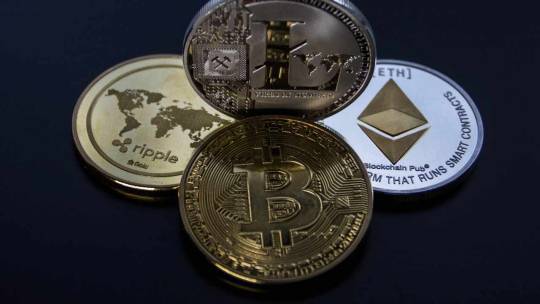
Why bitcoin adoption will speed up over the next decade

Why bitcoin adoption will speed up over the next decade

Why bitcoin adoption will speed up over the next decade

Quick take

1 minute read

Over the course of this year, mainstream adoption has been plentiful. Many people have looked towards the cryptocurrency industry as a result of the COVID-19 pandemic and the economic turmoil that came afterwards.

Over the course of this year, mainstream adoption has been plentiful. Many people have looked towards the cryptocurrency industry as a result of the COVID-19 pandemic and the economic turmoil that came afterwards.

With big mainstream financial players coming into the industry, the question must be asked as to how long it will take for bitcoin to become a day-to-day asset for everyone.

Brian Estes, the founder of the investment company known as Off The Chain Capital believes that there are about 10 years remaining until the leading cryptocurrency becomes “normal“ for everyone.

Speaking in an interview earlier this year with CT, Brian said:

“I think in 2029, 2030, when 90% of U.S. households and people in the United States use cryptocurrency and Bitcoin, then I think it becomes a stable part of the economy, and not just the U.S. economy, but I think the world economy.”

But where does he get his information from?

The reason behind Brian’s process is based on an analysis of the S-curve. For those that don’t know, this is a common graphical image that represents the acceleration and the overall process of adoption for new technologies such as blockchain or cryptocurrency. 

He further said:

“The amount of time it takes for a new technology to go from 0% adoption to 10% adoption is the same amount of time takes it to go from 10% adoption to 90% adoption.”

Interestingly, he highlighted that it took about one decade for the leading coin to go from 0 to 10% adoption. In hindsight, this makes a lot of sense as bitcoin is just over 11 years old at the time of writing and it was only in 2017 when it became mainstream after hitting $20,000.

For more news on this and other crypto updates, keep it with CryptoDaily

© 2020 CryptoDaily All Rights Reserved. This article is provided for informational purposes only. It is not offered or intended to be used as legal, tax, investment, financial, or other advice.

Title: Why bitcoin adoption will speed up over the next decade
Sourced From: cryptodaily.co.uk/2020/12/why-bitcoin-adoption-will-speed-up
Published Date: Mon, 28 Dec 2020 13:45:13 +0000


Why bitcoin adoption will speed up over the next decade
Why bitcoin adoption will speed up over the next decade was originally published here https://dailynwssheet.tumblr.com/post/638832345316835328

Monday, 28 December 2020

The growth of Ethereum and how it has surpassed bitcoin as the biggest network

The growth of Ethereum and how it has surpassed bitcoin as the biggest network

The growth of Ethereum and how it has surpassed bitcoin as the biggest network

Quick Take

1 minute read

It seems that bitcoin is no longer the biggest network in the industry as Ethereum has been making a big name for itself in recent times growing its community and ecosystem.This is according to a recent report by Electric Capital. 

It seems that bitcoin is no longer the biggest network in the industry as Ethereum has been making a big name for itself in recent times growing its community and ecosystem.

This is according to a recent report by Electric Capital. The paper from the venture capital company was written by Maria Shen, a partner at the Business. More than 300 developers are getting ready to join the Ethereum network on a monthly basis and with such a large number of minds coming together on a project like this, it speaks volumes for the network and its future. Especially as many people are choosing ethereum over bitcoin and its own network.

Over the course of this year, it is good to see that the network has grown so massively during so much turmoil. Of course, with traditional markets taking a big hit following the coronavirus pandemic this year, crypto is an alternative that many have turned towards. Despite many people going towards this network, there are others who believe that bitcoin is still more active and the best ecosystem to be a part of. According to the venture capital company though, this couldn’t be any further from the truth.

The whole point of the report was to look into the results after looking at numerous blockchain-based cryptocurrency ecosystems. To be classed as actively contributing to the network, a developer would need to work on something related to the blockchain consistently. To that end, Ethereum is four times more active than the bitcoin network.

A big part of the Ethereum network is decentralised finance (DeFi) projects. These kinds of projects have been cropping up all over the mystery in recent times and as a result, activity on the network has increased massively.

Over the course of the next year, the network is expected to grow even more. Especially with the recent launch of the 2.0 upgrade.

For more news on this and other crypto updates, keep it with CryptoDaily

© 2020 CryptoDaily All Rights Reserved. This article is provided for informational purposes only. It is not offered or intended to be used as legal, tax, investment, financial, or other advice.

Title: The growth of Ethereum and how it has surpassed bitcoin as the biggest network
Sourced From: cryptodaily.co.uk/2020/12/growth-of-ethereum-how-it-surpassed-bitcoin-as-biggest-network
Published Date: Mon, 28 Dec 2020 13:45:10 +0000


The growth of Ethereum and how it has surpassed bitcoin as the biggest network
The growth of Ethereum and how it has surpassed bitcoin as the biggest network was originally published here https://dailynwssheet.tumblr.com/post/638813462288613376

Ethereum Price Analysis: After 18% From Yesterday’s Low, Is $800 In Sight For ETH?

Ethereum Price Analysis: After 18% From Yesterday’s Low, Is $800 In Sight For ETH?

Ethereum Price Analysis: After 18% From Yesterday’s Low, Is $800 In Sight For ETH?

ETH/USD – Ethereum Bulls Print Fresh 2020 Highs Above $700

Key Support Levels: $720, $700, $675.
Key Resistance Levels: $750, $762, $780.

Yesterday, Ethereum finally penetrated beyond the $675 resistance provided by a bearish .786 Fib Retracement. It managed to spike above $700, but the bears stepped in to cause the daily candle to close around $680.

Today, the ETH bulls continue to drive further higher as they penetrated beyond $700 again to reach as high as $738. It has since dropped slightly as the buyers battle to break the $733 resistance (1.414 Fib Extension). In any case, the cryptocurrency increased substantially from yesterday’s low at $625.


ETH/USD Daily Chart. Source: TradingView

ETH-USD Short Term Price Prediction

Looking ahead, if the bulls break $733, the first level of strong resistance lies at $750 (bearish .886 Fib Retracement). This is followed by $762, $780, $790 (1.272 Fib Extension), and $800.

On the other side, the first level of support lies at $720. After that, there’s $700, $675, $665, and $641 (.382 Fib).

The RSI is above the mid-line as the buyers dominate the market momentum and are still far from being overbought. Additionally, the Stochastic RSI produced a bullish crossover signal a few days ago and still has room to continue further before becoming overbought.

ETH/BTC – ETH Continues Rebound From 0.024 BTC.

Key Support Levels: 0.0262 BTC, 0.026 BTC, 0.025 BTC.
Key Resistance Levels: 0.027 BTC, 0.0275 BTC, 0.028 BTC.

Against Bitcoin, Ethereum had dropped into the 0.024 BTC support yesterday, where it managed to rebound higher. In fact, ETH briefly dropped beneath 0.023 BTC yesterday, but the buyers regrouped to allow the daily candle to close above 0.026 BTC.

Today, the bulls continued to drive ETH higher as they penetrated back above the November lows 0.0262 BTC to reach as high as 0.0275 BTC. The sellers have since dropped the price as ETH now trades near the 0.0269 BTC resistance (bearish .382 Fib Retracement).


ETH/BTC Daily Chart. Source: TradingView

ETH-BTC Short Term Price Prediction

Beyond 0.027 BTC, the first level of resistance is expected at 0.0275 BTC. This is followed by 0.028 BTC, 0.0282 BTC (bearish .5 Fib), and 0.0284 BTC (Feb 2020 highs). Added resistance lies at 0.0287 BTC and 0.0295 BTC.

On the other side, the first level of support lies at 0.0262 BTC. This is followed by 0.026 BTC, 0.025 BTC, and 0.0245 BTC (Jul 2020 lows). Added support lies at 0.024 BTC and 0.0237 BTC.

The RSI is at the mid-line as indecision looms within the market. It will need to cross this line for the bullish momentum to take control of the market movement. The Stochastic RSI recently produced a bullish crossover signal, which is a promising signal for ETH holders.

Title: Ethereum Price Analysis: After 18% From Yesterday’s Low, Is $800 In Sight For ETH?
Sourced From: cryptopotato.com/ethereum-price-analysis-after-18-from-yesterdays-low-is-800-in-sight-for-eth/
Published Date: Mon, 28 Dec 2020 13:44:31 +0000


Ethereum Price Analysis: After 18% From Yesterday’s Low, Is $800 In Sight For ETH?
Ethereum Price Analysis: After 18% From Yesterday’s Low, Is $800 In Sight For ETH? was originally published here https://dailynwssheet.tumblr.com/post/638790814745690112

Sunday, 27 December 2020

Did CBDCs affect the crypto space in 2020, and what’s next in 2021? Experts answer

Did CBDCs affect the crypto space in 2020, and what’s next in 2021? Experts answer

Authentication failed. Unique API key is not valid for this user.


Did CBDCs affect the crypto space in 2020, and what’s next in 2021? Experts answer
Did CBDCs affect the crypto space in 2020, and what’s next in 2021? Experts answer was originally published here https://dailynwssheet.tumblr.com/post/638722872660131841

SEC vs. Ripple: A predictable but undesirable development

SEC vs. Ripple: A predictable but undesirable development

SEC vs. Ripple: A predictable but undesirable development

The U.S. Securities and Exchange Commission has not been kind to crypto in the past year. In March 2020, in the SEC v. Telegram case, the Commission won a worldwide injunction against the proposed issuance of Grams by Telegram, undoing years of innovative work even in the absence of any allegations of fraud. Then, on the last day of September 2020, Judge Alvin K. Hellerstein dashed the hopes of Kik Interactive by ruling in favor of the SEC’s motion for summary judgment in SEC v. Kik Interactive, halting the sale of Kin crypto tokens. Both of these actions were filed in the Southern District of New York. On Dec. 22, 2020, the SEC decided that it was time to initiate another high-profile action, filing in the same district against Ripple Labs and its initial and current CEOs, Christian Larsen and Bradly Garlinghouse, respectively, for raising more than $1.38 billion through the sale of XRP since 2013.

The initial fallout from this action has been swift and severe: 24 hours after the lawsuit was filed, the price of XRP was down almost 25%. This still left XRP ranked fourth on CoinMarketCap, with a total market capitalization of over $10.5 billion.

The complaint

In its complaint, the Commission paints a straightforward pattern of sales of XRP that were never registered with the SEC or made pursuant to any exemption from registration. From the perspective of the Commission, this amounts to a sustained practice of illegal sales of unregistered, non-exempt securities under Section 5 of the Securities Act of 1933.

For readers not familiar with legal procedure, it might seem unusual for the case to be brought in a New York federal court, especially since Ripple is headquartered in California, and both named individuals reside there. However, Ripple has an office in the Southern District of that state, some statements were made by Garlinghouse while he was present in New York, and significant sales of XRP were made to New York residents. In legal parlance, this would make venues in the Southern District of New York appropriate.

In addition, it might be surprising to some that both Larsen and Garlinghouse were named personally in an action that seeks primarily to recover for XRP allegedly sold illegally by Ripple, through its wholly-owned subsidiary, XRP II LLC. They are named both because they individually also sold significant volumes of XRP — 1.7 billion by Larsen and 321 million by Garlinghouse — and because the SEC contends they “aided and abetted” Ripple in its sales.

Aiding and abetting is a cause of action that depends on a primary violation by a third party, in which the aider and abettor voluntarily and knowingly participates with the goal of assisting in the venture’s success. In this case, Ripple would be the primary violator, and both Larsen and Garlinghouse are alleged to have substantially participated in the pattern of Ripple’s XRP sales, with the goal of allowing the company to raise funds without registering XRP under the federal securities laws or complying with any available exemption from registration.

The bulk of the complaint provides an overview of digital assets, details the SEC’s version of the history of Ripple and its marketing efforts with regard to XRP, illustrates how in the opinion of the Commission, XRP satisfies the elements of the Howey investment contract test under the federal securities laws, and seeks to demonstrate how Larsen and Garlinghouse participated in the on-going sales efforts.

In addition to disgorgement of all “ill-gotten gains,” the requested order would permanently ban the named defendants from ever selling unregistered XRP or participating in any way in the sale of unregistered, non-exempt securities. It would also prohibit them from participating in the offering of any digital asset securities, and it seeks unspecified civil monetary penalties.

brief history of Ripple and XRP

The idea behind the current XRP dates back to late 2011 or early 2012, before the company changed its name to Ripple. The XRP Ledger, or software code, operates as a peer-to-peer database, spread across a network of computers that records data about transactions, among other things. In order to achieve consensus, each server on the network evaluates proposed transactions from a subset of nodes it trusts not to defraud it. Those trusted nodes are known as the server’s unique node list, or UNL. Although each server defines its own trusted nodes, the XRP Ledger requires a high degree of overlap between the trusted nodes chosen by each server. To facilitate this overlap, Ripple publishes a proposed UNL.

Upon the completion of the XRP Ledger in December 2012, and as its code was being deployed to the servers that would run it, a fixed supply of 100 billion XRP was set and created at little cost. Of those XRP, 80 billion were transferred to Ripple and the remaining 20 billion XRP went to a group of founders, including Larsen. At this point in time, Ripple and its founders controlled 100% of XRP.

Note that these choices represent a compromise between the fully decentralized, peer-to-peer network that was envisioned when Bitcoin (BTC) was first announced and a fully centralized network with a single trusted intermediary such as a conventional financial institution. In addition, Bitcoin was never designed or intended to be held or controlled by a single entity. In contrast, all XRP was originally issued to the company that created it and that company’s founders. This hybrid approach to a blockchain-based digital asset and more conventional assets created and controlled by a single entity led some crypto enthusiasts to complain that XRP was not a “true” cryptocurrency at all.

According to the SEC’s complaint, from 2013 through 2014, Ripple and Larsen made efforts to create a market for XRP by having Ripple distribute approximately 12.5 billion XRP through bounty programs that paid programmers compensation for reporting problems in the XRP Ledger’s code. As part of these calculated steps, Ripple distributed small amounts of XRP — typically between 100 and 1,000 XRP per transaction — to anonymous developers and others to establish a trading market for XRP.

Ripple then began more systematic efforts to increase speculative demand and trading volume for XRP. Starting in at least 2015, Ripple decided that it would seek to make XRP a “universal [digital] asset” for banks and other financial institutions to effect money transfers. According to the SEC, this meant that Ripple needed to create an active, liquid XRP secondary trading market. It, therefore, expanded its efforts to develop a use for XRP while increasing sales of XRP into the market.

At about this time, Ripple Labs, and its subsidiary, XRP II LLC, came under investigation by the U.S. Financial Crimes Enforcement Network, or FinCEN, acting pursuant to its mandates in the Bank Secrecy Act, or BSA. Acting in conjunction with the U.S. Attorney’s Office for the Northern District of California, the two companies were charged with failing to comply with various BSA requirements, including failure to register with FinCEN and failure to implement and maintain proper Anti-Money Laundering and Know Your Customer protocols. According to FinCEN, Ripple’s failure to comply with these FinCEN requirements was facilitating the use of XRP by money launderers and terrorists.

This action did not proceed to trial, with Ripple Labs settling the charges by agreeing to pay a $700,000 fine and further agreeing to take immediate remedial steps to bring the companies into compliance with BSA requirements. The settlement was announced by FinCEN on May 5, 2015. The major contention of FinCEN throughout its investigation was that XRP was a digital currency. Ripple acceded to this position and has since worked to comply with BSA requirements.

At the same time, as noted in the SEC’s complaint, from 2014 through the third quarter of 2020, the company sold at least 8.8 billion XRP in the market and institutional sales, raising approximately $1.38 billion to fund its operations. In addition, the complaint asserts that from 2015 through at least March 2020, while Larsen was an affiliate of Ripple as its CEO and later chairman of the board, Larsen and his wife sold over 1.7 billion XRP to public investors in the market. Larsen and his wife netted at least $450 million from those sales. From April 2017 through December 2019, while an affiliate of Ripple as CEO, Garlinghouse sold over 321 million XRP he had received from Ripple to public investors in the market, generating approximately $150 million from those sales.

XRP is not like Bitcoin or Ether

The preceding description paints a picture of a digital asset that is widely held by persons scattered around the globe. In the case of both Bitcoin and Ether (ETH), this kind of decentralization was apparently enough to convince the SEC that those two digital assets should not be regulated as securities. As Director Bill Hinman of the SEC’s Division of Corporation Finance explained in June of 2018:

“If the network on which the token or coin is to function is sufficiently decentralized — where purchasers would no longer reasonably expect a person or group to carry out essential managerial or entrepreneurial efforts — the assets may not represent an investment contract. Moreover, when the efforts of the third party are no longer a key factor for determining the enterprise’s success, material information asymmetries recede. As a network becomes truly decentralized, the ability to identify an issuer or promoter to make the requisite disclosures becomes difficult, and less meaningful. […] The network on which Bitcoin functions is operational and appears to have been decentralized for some time, perhaps from inception. Applying the disclosure regime of the federal securities laws to the offer and resale of Bitcoin would seem to add little value.”

This kind of analysis does not really work for XRP, most of which continues to be owned by the company that created it, where the company continues to have significant influence over which nodes will serve as trusted validators for transactions, and where the company continues to play a significant role in the profitability and viability of the asset. Part of that role will now, of course, involve responding to this latest SEC initiative.

The court’s probable reaction

Unfortunately for Ripple and its former and current CEOs, the SEC has a strong case that XRP fits within the Howey investment contract test. Derived from the 1946 Supreme Court decision in SEC v. W. J. Howey, this test holds that you have bought a security if you: (1) make an investment (2) of money or something else of value, (3) in a common enterprise, (4) with the expectation of profits, (5) from the essential managerial efforts of others. Most of the purchasers of XRP, or certainly a very large number of them, would appear to fit within each of these categories.

Ripple raised more than $1.38 billion from the sale of XRP, so it is abundantly clear that purchasers were paying something of value. Moreover, as there was no effort to limit purchasers to the amount of XRP that they might reasonably “use” for anything other than investment purposes, that element appears likely to be present as well. The fact that the fortunes of all the investors rise and fall together along with the value of XRP in the marketplace should satisfy the commonality requirement.

The complaint highlights a number of things that Ripple has done to promote profitability, including statements that it has made, all of which suggest that a reason for purchasing XRP is the potential for appreciation. The limited functionality of XRP in comparison to its trading supply is another reason to believe that most purchasers were buying for investment, seeking to make a profit.

Finally, the significant on-going involvement and role of the company, especially given its huge continuing ownership interest in XRP, means that there is a strong case to be made that the profitability of XRP is highly dependent on the efforts of Ripple. All of this points to the reality that, under the Howey Test, XRP is likely to be a security.

Ripple’s response to the SEC’s action

Ripple’s response to the SEC’s enforcement action came even before the SEC’s complaint was officially filed. On Dec. 21, Garlinghouse tweeted out a condemnation of the SEC’s planned action, criticizing the agency for picking favorites and trying to “limit US innovation in the crypto industry to BTC and ETH.” Soon after, Ripple’s general counsel, Stuart Alderoty, gave a strong indication of how the company was likely to respond in the pending matter by pointing out the 2015 FinCEN issue, which he claimed was a government determination that XRP was a digital currency rather than a security under the Howey Test.

Unfortunately, classification as a digital currency does not necessarily preclude regulation as a security. As another New York district court decided in the 2018 case of CFTC v. McDonnell, in the context of the Commodity Futures Trading Commission’s authority to regulate digital assets, “Federal agencies may have concurrent or overlapping jurisdiction over a particular issue or area.”

Thus, even though FinCEN regulates crypto as a digital asset, the CFTC may treat it as a commodity; the SEC may regulate it as a security; and the Internal Revenue Service may tax it as property. All at the same time.

Conclusion

This comment should not be taken as approval of the SEC’s current approach and relative hostility to crypto offerings. As the SEC’s complaint notes, the XRP sales that are now being questioned took place over many years. The initial sales date back to 2013, which had happened considerably before the SEC first publicly announced its position that digital assets should be regulated as securities if they fit within the Howey investment contract analysis, which did not come until 2017 with The DAO Report. Moreover, since 2015, Ripple has been proceeding in accordance with the settlement reached with FinCEN. Since that time, Ripple has worked to bring its operations into compliance with BSA requirements, operating as if XRP is a currency rather than a security.

The opinions expressed are the author’s alone and do not necessarily reflect the views of the University or its affiliates. This article is for general information purposes and is not intended to be and should not be taken as legal advice.

Title: SEC vs. Ripple: A predictable but undesirable development
Sourced From: cointelegraph.com/news/sec-vs-ripple-a-predictable-but-undesirable-development
Published Date: Sun, 27 Dec 2020 17:17:00 +0000


SEC vs. Ripple: A predictable but undesirable development
SEC vs. Ripple: A predictable but undesirable development was originally published here https://dailynwssheet.tumblr.com/post/638696435135774720

The pandemic year ends with a tokenized carbon cap-and-trade solution

The pandemic year ends with a tokenized carbon cap-and-trade solution

The pandemic year ends with a tokenized carbon cap-and-trade solution

It has been a blazing start to a new decade, with 13% more large, uncontrolled wildfires around the world this year compared with 2019. This has spelled dire consequences for CO2 levels, which have made worse a terrible COVID-19 pandemic that has led to unprecedented worldwide lockdowns that have rapidly pushed the economy toward digitization.

Related: How has the COVID-19 pandemic affected the crypto space? Experts answer

As a result of the COVID-19 pandemic, governments around the world have been forced to focus on integrating blockchain technology into their financial services. At the 75th anniversary of the United Nations General Assembly, Sky Guo, a founding member of the Official Monetary and Financial Institutions Forum and co-founder of Cypherium — an enterprise-focused platform facilitating interoperability between blockchains and central bank digital currencies, or CBDCs — discussed how the next generation of foreign policy leaders can leverage emerging digital technologies to solve the world’s most pressing challenges, given that 80% of world central banks are evaluating adopting CBDCs.

Related: Not like before: Digital currencies debut amid COVID-19

Switching to CBCDs and a world financial infrastructure that heavily relies on blockchain technology can nevertheless have a formidable impact on CO2 levels all over the world if the electricity used for energy is produced from coal or other fossil fuels that cause the highest levels of CO2 and other greenhouse gas pollution.

Related: The need to report carbon emissions amid the coronavirus pandemic

According to the study “The Carbon Footprint of Bitcoin,” conducted by researchers from the Technical University of Munich and MIT, Bitcoin (BTC) mining alone generates between 23.6 and 28.8 megatons in CO2 emissions each year, which contributes to climate change. The world’s CO2 levels hit new highs last year, a trend that is expected to repeat itself in 2020 despite coronavirus-related lockdowns that have forced a global industrial slowdown, according to a recent report published by the World Meteorological Organization.

In the time of the global pandemic, the economy will continue to digitize. So, the best way to avoid climate change is by adopting a climate policy that limits emissions and puts a price on them, according to the Environmental Defense Fund.

Carbon credits and markets are frequently incorporated into national and international efforts to mitigate increased concentrations of greenhouse gases in the atmosphere by putting a price on them. Experts often debate the pros and cons:

A carbon tax directly establishes a price on greenhouse gas emissions, so companies are charged fees that accumulate for every ton of emissions they produce.A cap-and-trade/energy-trading system issues a set number of emissions “allowances” each year that can be auctioned to the highest bidder as well as traded on secondary markets, thereby creating a carbon price.

Blockchain technology can be used to track carbon credits — a generic term for any tradable certificate or permit representing the right to emit one ton of CO2 — to reduce environmental pollution and carbon emissions, according to the report “Blockchain of Carbon Trading for UN Sustainable Development Goals.”

World’s first tradable carbon token

The Universal Protocol Alliance, a coalition of leading blockchain companies and crypto firms, launched the world’s first tradable carbon token on a public blockchain, dubbed Universal Carbon (UPCO2). It can be bought and held as an investment or burned to offset an individual’s carbon footprint. Each token represents one year-ton of CO2 emissions that have been prevented by a certified REDD+ project preventing rainforest loss or degradation. It is backed by a Voluntary Carbon Unit, a digital certificate issued by Verra — an international standards agency — that enables projects to turn their greenhouse gas reductions into carbon credits that can be traded.

As Juan Pablo Thieriot, co-founder of the UPA and CEO of Uphold, explained:

“This year may go down as the key inflection point for climate change. The year it went from a far-off issue enshrined in distant accords like Kyoto and Paris, to an existential threat affecting the lives of tens of millions of people. In recent months, we’ve seen Australia and California on fire, ever more powerful hurricanes, the U.S. president-elect Joe Biden announcing a Climate Administration, and companies such as Apple, Microsoft, and Nike voluntarily committing to carbon neutrality.”

He also added that “Combating climate change is likely to become the dominant economic issue of the next 20 years.”

The UPCO2 token could lead to the establishment of a global clearing price for tokenized carbon credits by allowing market mechanisms to drive industrial and commercial processes in the direction of low emissions or less carbon-intensive approaches, as the supply of carbon credits in 2020 has only represented 22% of global greenhouse gas emissions, according to the World Bank.

Cap-and-trade programs of the top six CO2-emitting countries/regions of the world

Cap-and-trade programs use market forces to reduce emissions cost-effectively. This stands in contrast to “command-and-control” approaches where the government determines performance standards or technology choices for individual facilities. It also differs from a carbon tax in that it provides a high level of certainty about future emissions but not about the price of those emissions (carbon taxes do the inverse).

With cap-and-trade programs, the market determines a price on carbon, which drives investment and market innovation. It is the preferable policy when a jurisdiction has a specified emissions target, such as set by the Paris Agreement. There are a number of studies that have reviewed the success of cap-and-trade programs by identifying some key issues from the top six CO2-emitting countries/regions in the world.

China

China launched the initial phase of a national carbon market in 2017 with help from the Environmental Defence Fund to limit and reduce CO2 emissions from factories and other industries in a cost-effective manner. This year, China’s Ministry of Ecology and Environment moved closer to completing the launch of the market, releasing draft rules — in addition to registry and settlement regulations — for its national energy trading system.

The emissions trading scheme, or ETS, will initially cover coal- and gas-fired power plants.

Based on the plant’s power generation output, it will allocate allowances, or permits, and each fuel and technology will have different benchmarks. The ETS is expected to be the world’s largest and expand to seven additional sectors, covering one-seventh of worldwide CO2 emissions from fossil fuels. A report by the International Energy Agency dubbed “China’s Emissions Trading Scheme: Designing efficient allowance allocation” makes policy recommendations for China’s ETS.

Related: How the biggest CO2 polluter is becoming the world’s leading producer of solar panels

United States

Efforts in the United States to create a nationwide cap-and-trade system in 2009 proved unsuccessful. Instead, 10 states now participate in the Regional Greenhouse Gas Initiative, a cap-and-trade program established in 2009, while California has operated a cap-and-trade program since 2013 that is linked with a program in Quebec, Canada.

A study published by the Harvard Project on Climate Agreements dubbed “Carbon Taxes vs. Cap and Trade: Theory and Practice” argues that an economywide carbon pricing system is essential for any U.S. national policy that seeks to achieve meaningful, cost-effective reductions in CO2 emissions. Another study by the World Resources Institute titled “Putting a Price on Carbon: Reducing Emissions” finds that a well-designed carbon tax or cap-and-trade program could be the centerpiece of U.S. efforts to reduce greenhouse gas emissions.

Related: Is US environmental tax policy hindering solar power to fuel digital technologies?

European Union

The European Union has the world’s first, and its largest, major carbon market. Its ETS is at the core of its policy for fighting climate change, and it is one of the most important tools at its disposal for the cost-effective reduction of greenhouse gas emissions.

A study titled “Personal carbon trading: a review of research evidence and real-world experience of a radical idea” points out that personal carbon trading, a catch-all term for multiple downstream cap-and-trade policies, is an innovative CO2 mitigation approach. It seeks to limit a society’s carbon emissions by engaging individuals in the process, and it is able to cover over 40% of national carbon emissions by combining various mechanisms to drive socioeconomic and psychological behavioral change.

Another study dubbed “The European Union Emissions Trading System reduced CO2 emissions despite low prices” points out that the prices produced by carbon markets are often considered too low relative to the social cost associated with carbon, but nevertheless, the EU’s ETS resulted in a 3.8% reduction of total EU-wide emissions.

Related: Green policy and crypto energy consumption in the EU

India

In 2019, the Indian state of Gujarat launched the first-ever emissions trading system for particulate pollution. It serves as a pilot for the rest of India, as well as the world, and a means of reducing air pollution and facilitating economic growth. Additionally, leading companies in India set up their own carbon pricing mechanisms in a three-phase process. India’s emissions trading systems were reviewed in a report prepared by the Environment Defence Fund titled “India: An Emissions Trading Case Study.”

Related: India is fostering a solarized digital future

Russia

Currently, there is no cap-and-trade carbon pricing mechanism in Russia. A study dubbed “Carbon Tax or Cap-and-Trade for Russia? Evidence from RICE Model and Other Considerations” states that Russia should select a carbon tax over a cap-and-trade system due to political, economic and historical factors, but it concludes that Russia is unlikely to take decisive action to tackle climate change in the near future.

Related: Russia leads multinational stablecoin initiative

Japan

Japan has had a cap-and-trade program in place for Tokyo since 2010. A study titled “The impact of the Tokyo emissions trading scheme (ETS) on office buildings: what factor contributed to the emission reduction?” evaluates Tokyo’s ETS, which was the first emissions trading program for greenhouse gas emissions from office buildings.

While the government of Tokyo called the ETS successful, not everyone believes that it was the driving force behind the nation’s emission reductions. Some have argued that it was actually due to the Great East Japan Earthquake in 2011, which resulted in increased electricity prices. In the aforementioned study, researchers conducted an econometric analysis using a facility-level data set for Japanese office buildings, finding that half of the emission reduction resulted from the ETS, while the other half was a result of the electricity price increases.

Related: Japan to solarize its burgeoning digital economy

Conclusion

As Patricia Espinosa, executive secretary of the United Nations Framework Convention on Climate Change, pointed out: “COVID-19 hasn’t put climate change on hold.”

And as Alexandre Gellert Paris of the UNFCCC explained:

“As countries, regions, cities and businesses work to rapidly implement the Paris Climate Change Agreement, they need to make use of all innovative and cutting-edge technologies available. Blockchain could contribute to greater stakeholder involvement, transparency and engagement and help bring trust and further innovative solutions in the fight against climate change, leading to enhanced climate actions.”com. Every investment and trading move involves risk, you should conduct your own research when making a decision.

Title: The pandemic year ends with a tokenized carbon cap-and-trade solution
Sourced From: cointelegraph.com/news/the-pandemic-year-ends-with-a-tokenized-carbon-cap-and-trade-solution
Published Date: Sun, 27 Dec 2020 09:27:00 +0000


The pandemic year ends with a tokenized carbon cap-and-trade solution
The pandemic year ends with a tokenized carbon cap-and-trade solution was originally published here https://dailynwssheet.tumblr.com/post/638651141287280640

401k to Gold IRA Rollover Guide

401k to Gold IRA Rollover Guide Source: roberthnanez0